
The best wood for beginner woodworking projects is pine for practice and painted pieces, poplar for smooth painted furniture, and plywood for shelves, cabinets and anything wide. All three are easy to find at home centers, affordable, and easy to cut with basic tools. Once you're comfortable, move up to oak, maple, cherry or walnut for pieces with a clear finish, and use cedar for anything that lives outdoors.
This guide compares the common woods side by side and shows you how to pick good boards at the store. It's part of our woodworking for beginners series. If lumber sizes confuse you, read how to read woodworking plans first.
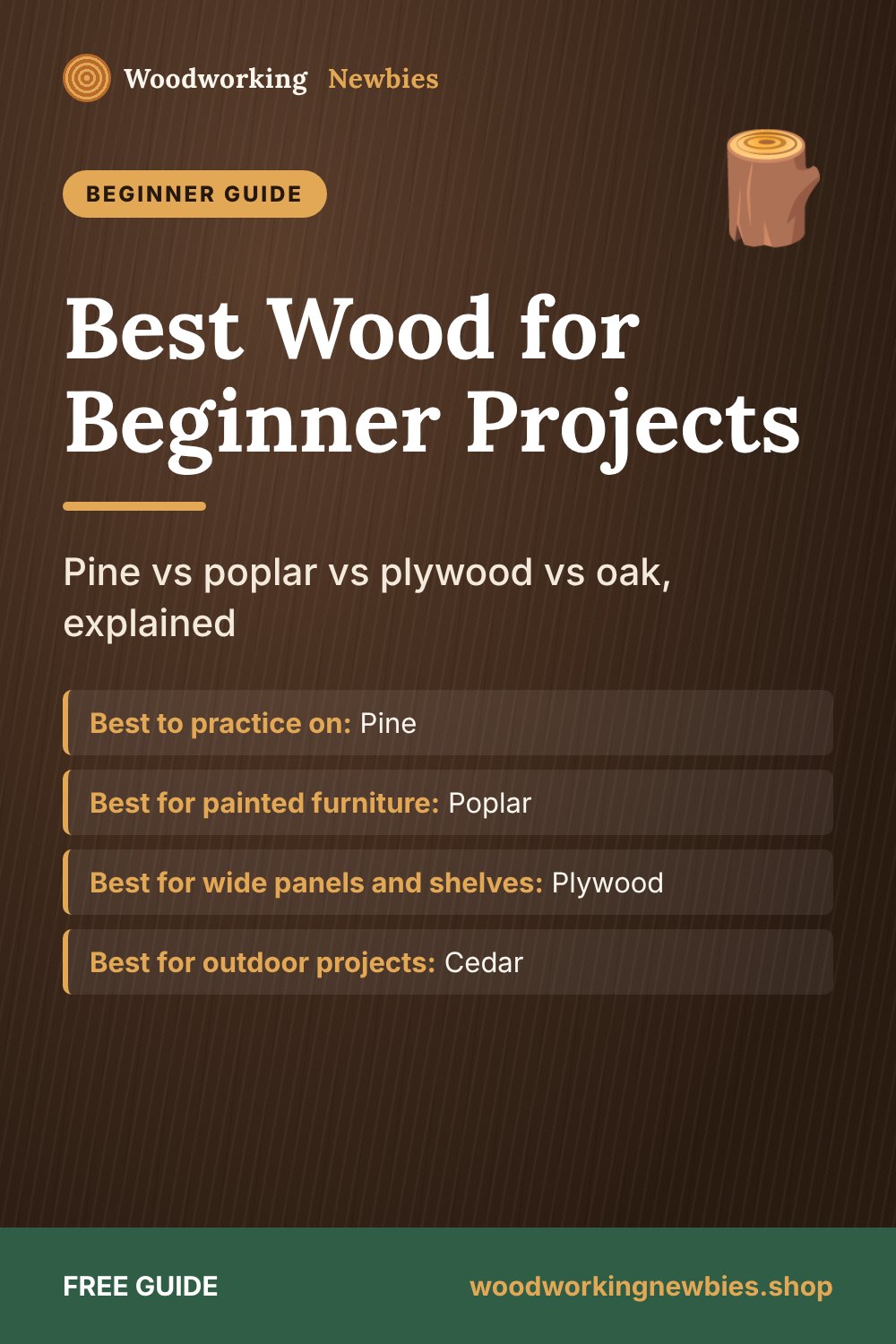
At a glance
- Best to practice on
- Pine
- Best for painted furniture
- Poplar
- Best for wide panels and shelves
- Plywood
- Best for outdoor projects
- Cedar
- Best for gifts and kitchen items
- Maple, cherry, walnut
Beginner shortcut
Not sure which wood a project needs? Every plan in the TedsWoodworking library comes with a materials list, so you buy the right boards the first time (according to the sales page).
Common woods compared
| Wood | Hardness* | Relative cost | Easy to work? | Best for |
|---|---|---|---|---|
| Pine (white or yellow) | Soft | $ | Very easy | Practice, shop projects, rustic decor, painted pieces |
| Poplar | Medium-soft | $–$$ | Easy | Painted furniture, trim, drawer parts |
| Plywood (birch or sanded pine) | Varies | $–$$ | Easy with a guide | Shelves, cabinets, wide tops, cut-out shapes |
| Cedar | Soft | $$ | Easy | Planters, garden beds, outdoor furniture |
| Red oak | Hard | $$ | Moderate | Furniture with a clear finish |
| Hard maple | Very hard | $$–$$$ | Moderate | Cutting boards, tabletops, workbench tops |
| Cherry | Medium-hard | $$$ | Easy to moderate | Boxes, fine furniture; darkens beautifully with age |
| Walnut | Medium-hard | $$$ | Easy to moderate | Gifts, boxes, accents, serving boards |
*Hardness is relative. Harder woods dent less but are tougher on tools and harder to cut by hand. Prices vary a lot by region.
Softwoods for your first projects
Pine
Cheap, light and easy to cut, drill and sand. It dents easily and can look blotchy when stained, so use a pre-stain conditioner or paint it. Perfect for a 2x4 workbench or a 2x4 Christmas tree.
Cedar
Naturally resistant to rot and insects, and it smells great. The classic choice for planters and our raised garden bed with legs.
Sheet goods
Plywood
Thin layers glued in alternating directions make it flat, stable and strong. It's ideal for anything wider than a single board. Check the grade: one smooth face ("A" or "B") is worth it for visible parts. Note that 3/4 in plywood is often a little thinner than its label.
MDF
Very flat and smooth, great for painted projects, but heavy, weak with screws near edges, and it swells with water. Always wear a dust mask when cutting it.
Build with confidence
Plans that tell you exactly what to buy
TedsWoodworking includes 16,000+ plans, each with a materials list and a cut list, so you know which boards to buy and how to cut them.
- Materials lists and cut lists with each plan
- Beginner plans that use common lumber
- Step-by-step diagrams from several angles
- One-time $67, 60-day money-back guarantee
Read our honest TedsWoodworking review for the pros and cons.
Hardwoods for gifts and furniture
- Poplar: the beginner's hardwood. Smooth, straight and inexpensive, with a greenish tint that's best painted.
- Red oak: strong with a bold grain. Open pores make it less ideal for cutting boards.
- Hard maple: tough and tight-grained. Excellent for cutting boards (see our food-safe finish guide).
- Cherry and walnut: beautiful and pleasant to work. Use them for small gifts so a single board goes a long way.
How to pick good boards at the store
- Sight down the board like a rifle barrel. Skip boards that bow, twist or cup.
- Check the ends for cracks (checks) and avoid big, loose or dark knots.
- Look for "S4S" (surfaced four sides). These boards are ready to use without a planer.
- Feel the weight. Unusually heavy, damp boards are still wet and will move as they dry.
- Consider "select" or "premium" grade pine for visible parts. It costs more but has fewer knots.
- Buy 10–15% extra for mistakes and defects.
Which wood for which project?
| Project | Good choice |
|---|---|
| Workbench, shop shelves | 2x4 pine + plywood |
| Painted bookshelf or nightstand | Poplar or plywood |
| Cutting board | Maple, cherry or walnut |
| Planter or garden bed | Cedar |
| Holiday decor and signs | Pine or plywood |
| Keepsake box or gift | Walnut, cherry or oak |
Pick a project and the right wood for it
Find beginner projects with exact materials lists inside TedsWoodworking. One payment, lifetime access and a 60-day refund.
One-time payment · Lifetime access · 60-day money-back guarantee
Save this for later
Pin this guide to your woodworking board on Pinterest so it is ready when you head to the shop.
FAQ
What is the easiest wood to work with for beginners?
Pine. It's soft, inexpensive and forgiving with basic tools. Poplar is a close second.
Is plywood good for woodworking projects?
Yes. It's flat, stable and perfect for shelves, cabinets and wide panels.
What wood should I avoid as a beginner?
Very hard or exotic woods. They're expensive, tough on tools and less forgiving of mistakes.


