
Woodworking in an apartment works if you swap loud power tools for hand tools, keep sessions short, and control dust before it spreads. A folding bench, a hand saw, a cordless drill, clamps and sandpaper are enough to build boxes, shelves, cutting boards and small furniture. Have the store or lumberyard make your big cuts, and do the quiet work at home.
If you are brand new, start with our guide on how to start woodworking with no experience. This article focuses on the apartment part: noise, dust, space and the projects that fit.
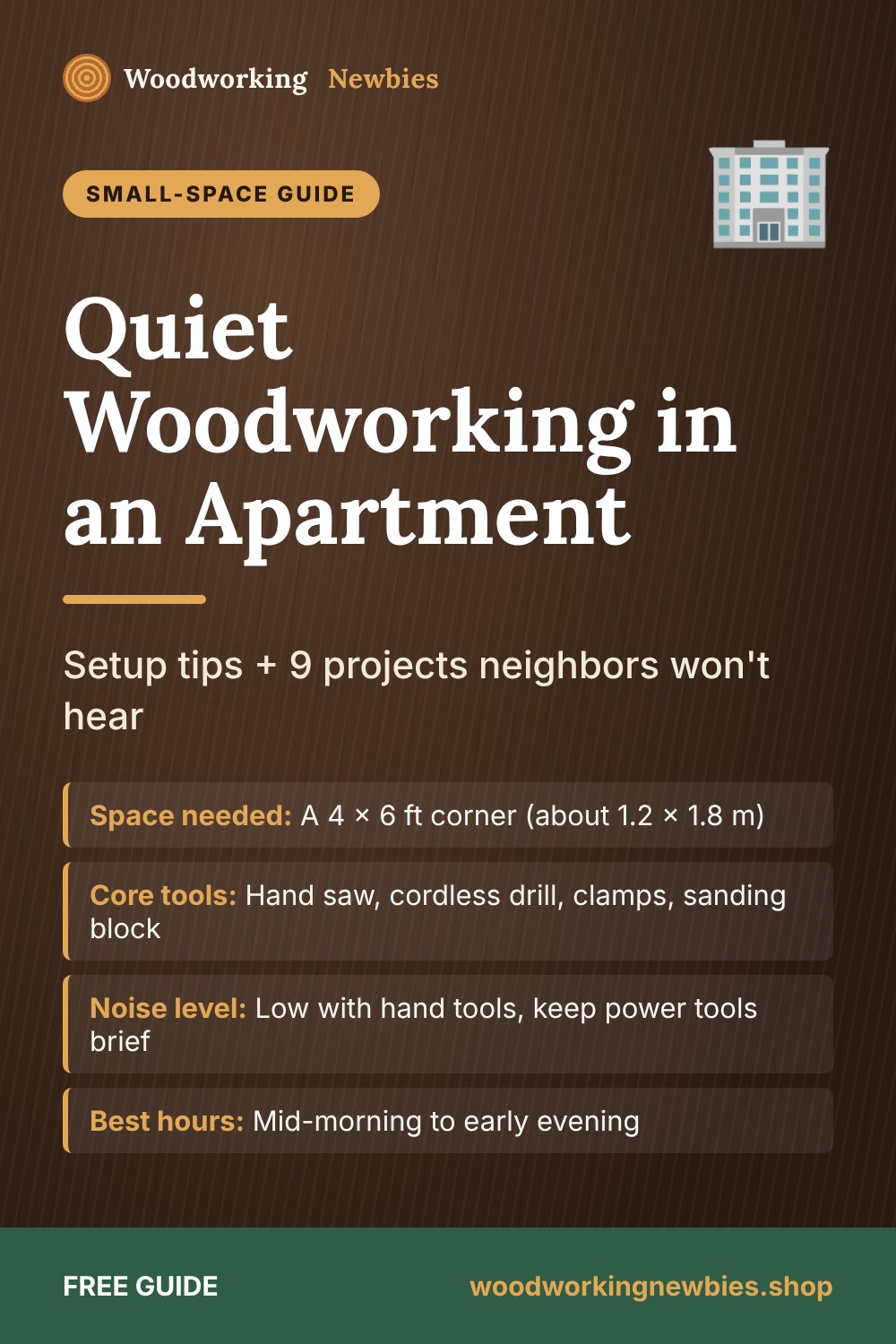
At a glance
- Space needed
- A 4 x 6 ft corner (about 1.2 x 1.8 m)
- Core tools
- Hand saw, cordless drill, clamps, sanding block
- Noise level
- Low with hand tools, keep power tools brief
- Best hours
- Mid-morning to early evening
- First project
- A simple wooden box or wall shelf
Beginner shortcut
Short on space? The TedsWoodworking plan library includes small-shop and compact projects with cut lists, so you can pre-plan every cut before you buy a single board.
Is woodworking in an apartment allowed?
Usually, yes, as long as you follow your lease and your building's quiet hours. Read the lease for rules about noise, "hazardous activities" and changes to walls. Some buildings ban spray finishes or the storage of flammable liquids. If in doubt, ask the building manager. A friendly word with your downstairs neighbor also helps more than you might think.
Set up a quiet apartment workspace
You don't need a dedicated room. You need a stable surface, a way to hold the work, and a floor you can clean.
The work surface
- A sturdy table or folding workbench. It must not rock. A wobbly bench is noisier and less safe.
- A rubber mat or old rug underneath. It cuts down on thumps traveling through the floor, and catches dropped screws.
- Clamps. Two or four bar clamps hold the work so you can saw and drill with both hands free of the blade path.
Tools that stay quiet
| Job | Quiet choice | Louder choice to limit |
|---|---|---|
| Crosscutting boards | Pull saw or hand saw with a miter box | Circular saw, miter saw |
| Drilling and driving screws | Cordless drill/driver on low speed | Impact driver (loud clicking) |
| Smoothing | Sanding block, card scraper, block plane | Random orbit sander |
| Shaping curves | Coping saw, rasp | Jigsaw |
| Joinery | Glue, clamps, pocket-hole jig with a drill | Router |
Our list of essential woodworking tools for beginners covers each of these in more detail.
Let the store make the big cuts
Many home centers will make basic straight cuts on plywood and boards for you. Bring a cut list, ask nicely, and expect cuts to be close but not perfect. Plan to clean up the last bit at home with a hand plane or sandpaper. This one habit removes most of the noise and mess from apartment woodworking.
Dust and finish rules for small spaces
- Sand over a drop cloth and vacuum with a shop vac or a household vacuum with a good filter after every session.
- Wear a dust mask rated for fine dust when sanding, even by hand.
- Prefer water-based finishes. They have less odor and clean up with water. Open windows and use a fan pointing out.
- Never spray finish indoors, and never leave oil-soaked rags balled up. Some oils (like linseed and many "oil finishes") can heat up and catch fire as they dry. Lay rags flat outside to dry, or store them in a sealed metal can filled with water.
- Store finishes sealed, away from heat, and in small amounts.
Noise etiquette that keeps the peace
- Work in the middle of the day, not early morning or late evening.
- Keep any power tool use to short bursts.
- Saw on a padded surface, and clamp the work so it doesn't chatter.
- Hammer as little as possible. Use screws and glue instead of nails.
- Do your noisiest steps at a friend's garage, a community makerspace or outside, if you can.
9 quiet woodworking projects for an apartment
Each of these can be built mostly with hand tools and a cordless drill. Pick wood that is easy to work; our guide to the best wood for beginner projects explains why pine and poplar are good starting points.
1. A simple wooden box
Four sides and a bottom, glued and pinned with screws. It teaches you to measure, cut square and clamp. Make it a tool box, a desk tidy or a gift box.
2. A floating wall shelf
One board and a hidden cleat. The sawing is minimal, and the drilling is quick. Use proper anchors or find the studs.
3. A cutting board
Buy a hardwood board already planed, cut it to length, round the corners and sand. Finish with a food-safe oil. See our guide to the best food-safe finish for cutting boards.
4. A phone or tablet stand
Two small pieces and an angled slot. A great way to use offcuts and practice careful marking.
5. A picture frame
A miter box and hand saw cut clean 45-degree corners quietly. Glue and clamp with a band clamp.
6. A shoe rack or boot tray
Slats screwed to two rails. Simple, useful by the door, and easy to size to your space.
7. A plant stand
A small square frame with four legs. It teaches you to keep things square and level.
8. Coasters and trivets
Thin slices of hardwood or small slats glued edge to edge. Almost all sanding and finishing, so there is very little noise.
9. A small step stool
Two sides, a top and a stretcher. Build it with screws and glue, and it will hold an adult when sized and built well.
Apartment builds
Pick projects that fit your space before you start
TedsWoodworking gives you 16,000+ plans, so you can find boxes, shelves and small furniture sized for an apartment, each with a materials list you can take to the store for pre-cuts.
- Small projects you can build with hand tools
- Cut lists you can hand to the store for big cuts
- Step-by-step diagrams for beginners
- $67 one time, 60-day money-back guarantee via ClickBank
Read our honest TedsWoodworking review before you decide.
A simple apartment starter kit
| Item | Why it matters |
|---|---|
| Japanese-style pull saw | Cuts on the pull stroke, quiet and accurate |
| Miter box | Guides the saw for square and 45-degree cuts |
| Cordless drill/driver | Drills and drives screws with little noise |
| 4 clamps | Hold work safely and glue up joints |
| Combination or speed square | Marks square lines |
| Sanding block and paper (80, 120, 180) | Quiet smoothing |
| Block plane | Trims edges and ends without dust clouds |
| Safety glasses and dust mask | Protect eyes and lungs |
Storing tools and wood in a small apartment
Keep everything in one rolling bin or a tool bag so it packs away in minutes. Store boards flat under a bed or upright in a closet, away from heaters so they don't warp. Buy wood for one project at a time. That saves space and money.
When you outgrow the corner, read our guide on how to start woodworking without a garage for balcony and closet setups, and our woodworking tips for beginners for habits that save time and wood.
Plan your next quiet build
Search the TedsWoodworking collection for small boxes, shelves and stands that suit an apartment. One payment, lifetime access, no monthly fees.
One-time payment · Lifetime access · 60-day money-back guarantee
Save this for later
Pin this guide to your woodworking board on Pinterest so it is ready when you head to the shop.
FAQ
What is the quietest way to cut wood in an apartment?
A hand saw, especially a pull saw guided by a miter box. It's quiet, accurate and makes little fine dust. For long cuts in plywood, ask the store to cut it for you.
Can I use power tools in an apartment?
Usually yes, within quiet hours and your lease rules. Keep it brief, use a cordless drill on low speed, and save loud tools like routers and circular saws for outside or a makerspace.
How do I control sawdust indoors?
Work over a drop cloth, sand by hand where you can, wear a dust mask and vacuum after every session. Avoid sweeping, which throws fine dust into the air.
What is a good first apartment woodworking project?
A simple box or a floating shelf. Both need only a few straight cuts, a drill and glue, and you'll use what you make every day.


